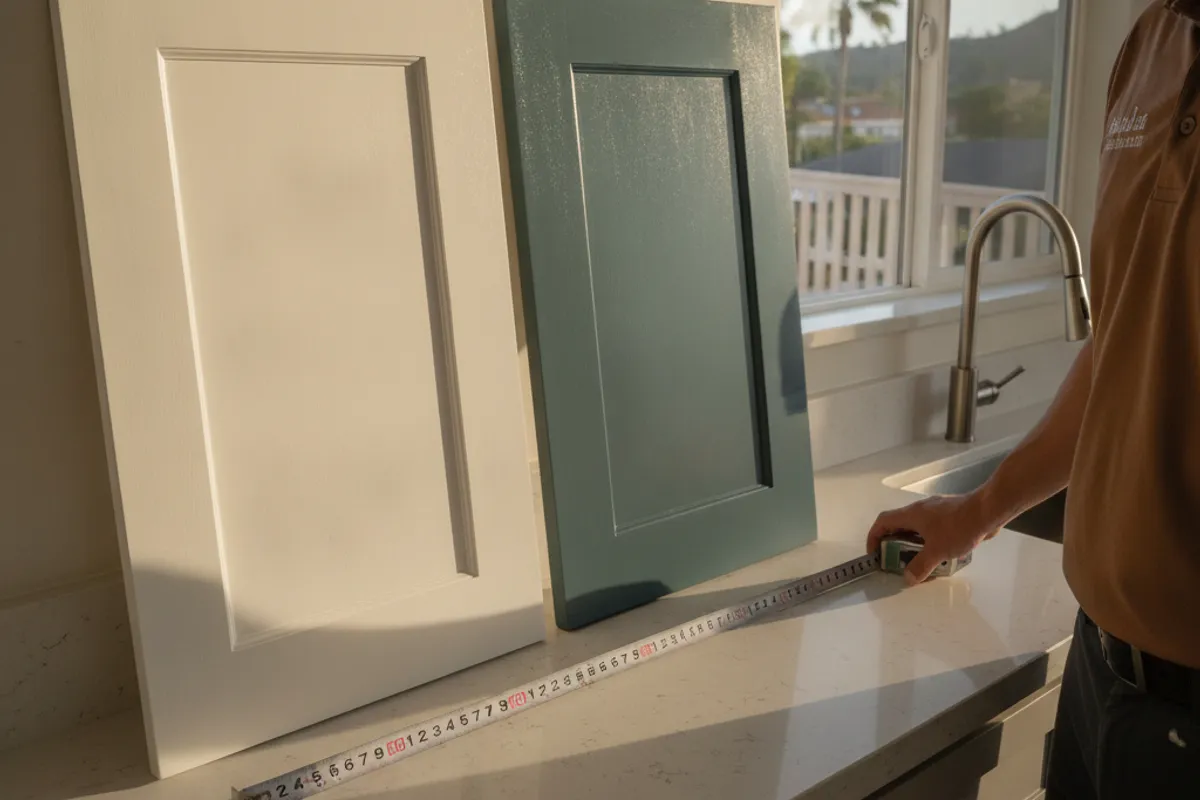
Two different approaches to the same problem
You’re tired of looking at your cabinets. The color is dated, the finish is worn, and the doors feel heavy and old. Painting and refacing both address the surface appearance. They don’t address the same problems, they don’t cost the same, and they don’t hold up the same way over time.
Understanding the difference saves you from spending $2,000 on cabinet painting that starts peeling in two years, or spending $7,000 on refacing when a good paint job would have been exactly what the kitchen needed.
What cabinet painting actually involves
Professional cabinet painting means: doors and drawer fronts come off, hardware is removed, surfaces are sanded, grain is filled if needed, primer goes on, two finish coats are applied, and everything gets reassembled after the paint cures. Done well, it takes 3-5 days and produces a clean, updated look.
Done poorly, and a lot of San Diego cabinet painting is done poorly, it means sprayed-in-place doors, inadequate prep, and a finish that starts chipping at the edges within 18 months. The San Diego climate, with its mild humidity and occasional salt air, isn’t brutal on interior finishes, but a bad paint job on a cabinet door faces daily wear that eventually wins.
What cabinet refacing involves
Refacing replaces the doors, drawer fronts, and hinges entirely, and applies a veneer or laminate skin to the exposed cabinet box faces. The boxes stay. The layout stays. What changes is every surface you can actually see.
The result is a kitchen that genuinely looks like new cabinetry, not painted old cabinetry. The new doors are manufactured, not painted, so the factory finish is consistent across all 28 doors in a way that field-sprayed painting rarely is.
When painting wins
The cabinet surface is already in good shape
Solid wood doors with original stain or paint that’s still adhering well are excellent candidates for repainting. If the substrate is sound and the door profile holds detail, a good painter can produce a finish that looks sharp and lasts 7-10 years with normal care.
The layout and door style are fine
If you love the Shaker doors you already have and just want a color change from honey oak to white, painting is the right call. Refacing makes the most sense when you’re also changing the door style.
Budget is the primary constraint
Professional cabinet painting in San Diego runs $1,200-$3,500 for a mid-size kitchen. That’s 50-70% less than refacing. If the cabinets are sound and the goal is simply a color change, painting is a defensible choice.
When refacing wins
The doors are a thermofoil or laminate style that can’t be painted well
Many 1990s-2000s San Diego kitchens have thermofoil cabinet doors, which are a thin vinyl film heat-pressed over MDF. These doors resist paint adhesion. Even with careful prep and primer, thermofoil doors tend to peel paint within a year or two because the paint can’t bond to the plastic surface reliably. Refacing replaces those doors entirely rather than trying to paint a surface that won’t cooperate.
The door style needs to change
Painting your cabinet boxes white doesn’t change the flat-panel raised-center doors from 1995. Refacing does. If the door style is dated, refacing is the only way to update it without full replacement.
The existing finish is failing
Cabinets with peeling laminate, worn edges, or delaminating faces need more than paint. Refacing covers the box faces with fresh veneer or laminate, addressing the underlying surface failure instead of painting over it.
Long-term durability matters
Factory-finished replacement doors on a refacing project are typically more durable than field-painted doors because the finish is applied in a controlled environment and cured properly. If the kitchen is a high-use space, a vacation rental, or you’re prepping the home for sale, the more durable result is worth the price difference.
What painting can’t fix
Painting changes the color and sheen of your existing surfaces. It cannot:
- Change the door style from raised-panel to Shaker
- Fix a cabinet box with failing laminate or swollen particleboard
- Address misaligned doors (though a good painter should adjust hinges)
- Add soft-close functionality to existing hinges
If two or more of those things matter, painting won’t solve the problem.
A realistic durability comparison
Professional cabinet painting in San Diego: 5-10 years before touch-ups or full repaint if done well, 1-3 years if done poorly or on thermofoil substrates.
Cabinet refacing with factory-finished doors: 15-25 years with normal care. The factory finish on a quality door is more durable than any field-applied paint.
For more on the refacing process and what to expect from the finished result, see the cabinet refacing service page. If you’re also evaluating soft-close hardware as part of the update, the soft-close upgrade service page covers what’s involved.
The bottom line
Painting is the right choice when you want a color change on structurally sound, paintable doors and have a tighter budget. Refacing is the right choice when the door style needs to change, the existing surface is failing, or you want a factory-quality finish that holds up for 15-plus years. If your cabinets have thermofoil or laminate doors, painting is the wrong starting point regardless of price.
Call (858) 925-5546 to connect with insured cabinet refacing crews across San Diego County who can assess your specific doors and give you an honest recommendation. Verify any contractor at cslb.ca.gov before work starts.